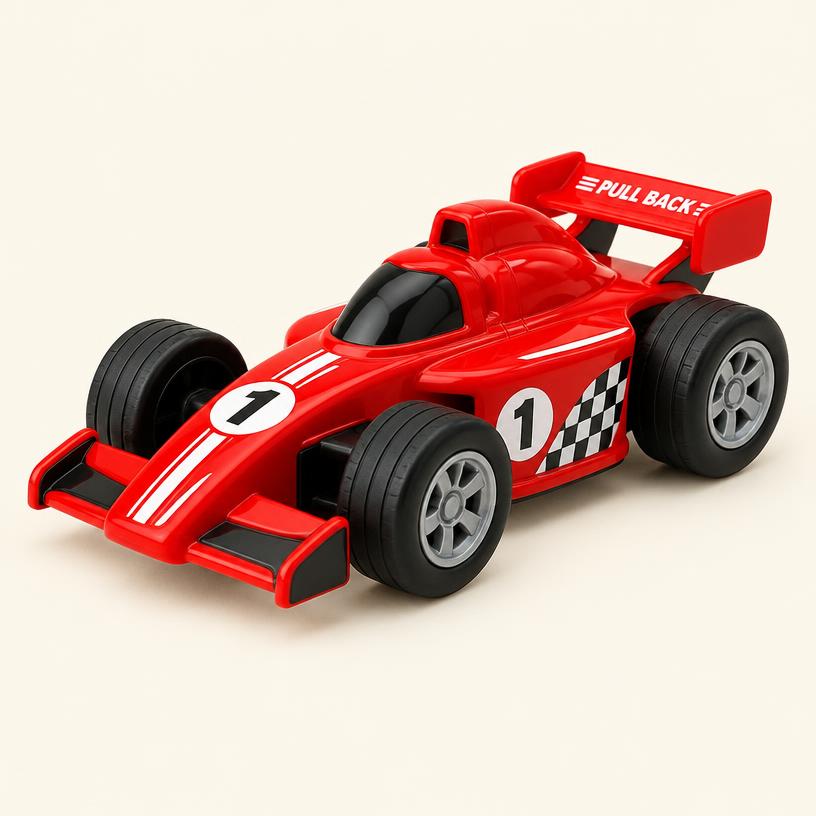
Pull-back race car
₹120 / pc
Min 20 pcs
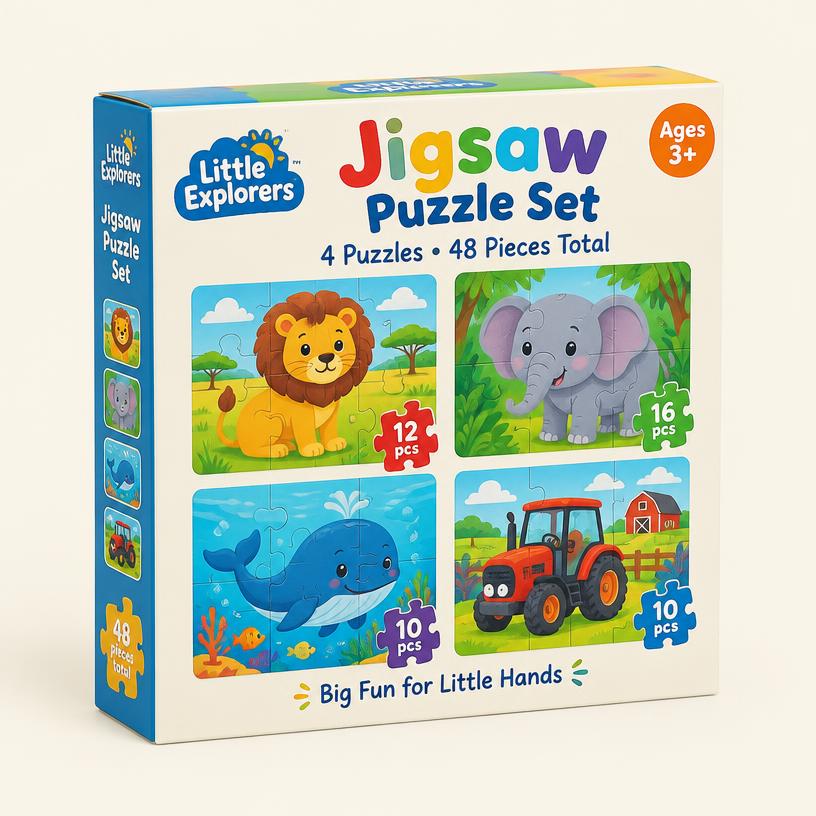
Jigsaw puzzle set
₹100 / pc
Min 12 pcs
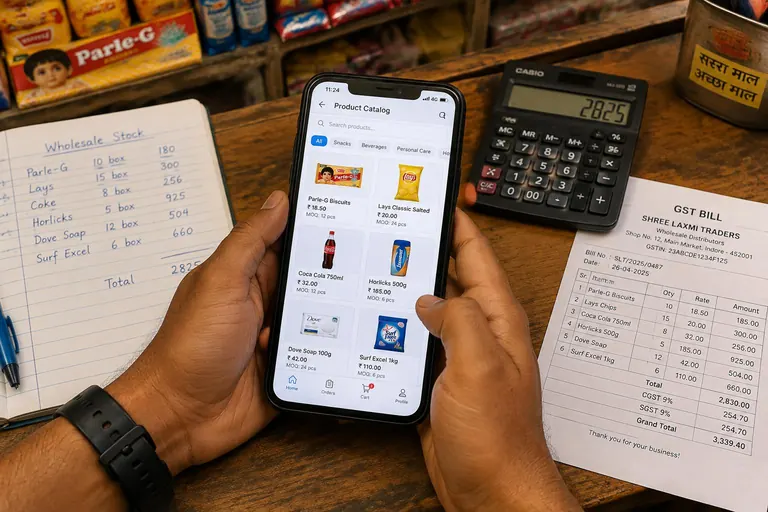
The buyer’s view on a phone
OrdersKaro · Sample preview
What a SKU is, how to number items and variants like TEE001-BLU-M, when a carton needs its own code, and how SKU differs from HSN, GTIN and barcodes — with a free worksheet.
Real-life example
"Blue wali, medium" — which one?
A buyer orders "blue T-shirt, medium" on a call. Staff pack the old design because both look similar.
- 1With codes: TEE001-BLU-M vs TEE002-BLU-M
- 2The buyer, staff and rate list now say the same thing
- 3Price changes never change the code
Quick answer
The short answer
A SKU (stock keeping unit) is a short code you choose for each item you sell, so you, your staff and your buyers mean the same thing. A blue T-shirt in M and the same T-shirt in L are different SKUs: TEE001-BLU-M and TEE001-BLU-L.
Pick one format and stick to it. This worksheet uses capital letters, numbers and hyphens. What matters is that two different items never share a code.
Hinglish mein
"Code bata do — TEE001-BLU-M — galti nahi hogi."Item code vs variant code
Start with a base code for the design, such as TEE001. Add short parts for what changes between versions you sell separately — colour (BLU), size (M), capacity or model — joined with hyphens.
Keep the order the same for every product, for example base-colour-size, so anyone can read a code without a chart.
- TEE001 — the design
- TEE001-BLU-M — blue, size M
- TEE001-BLU-L — blue, size L (a different SKU)
Build one code
- 01
Base
TEE001 = the design
- 02
+ Colour
BLU
- 03
+ Size
M
- 04
= SKU
TEE001-BLU-M
Units and packs: PC, SET, CTN
Add a pack part only when the pack is a separate item you stock and sell — for example a sealed carton of 48 notebooks sold as its own item: 001-A5-CTN48, next to the single piece 001-A5-PC.
A carton count or a price slab alone does not need a new SKU. If you sell the same notebook loose and just give a better rate at 48 pieces, keep one SKU and write the slab in your rate list.
Rules that prevent mix-ups
Most SKU trouble comes from small inconsistencies:
- Never leave a code blank, and never reuse a code for a different item.
- Use capitals only: TEE001, not Tee001.
- Use only letters, numbers and hyphens — no spaces, slashes or symbols.
- Leading zeros (001) are fine, but spreadsheets may drop them; keep the column as text.
- Don't put the price in the code, and don't change the code when the price changes.
- If you rename a code, update every list, label and catalogue yourself — nothing syncs automatically.
Worked example
A small sample list using these rules: two sizes of one T-shirt, a notebook sold loose and as a sealed carton, and a tiffin gift set. The worksheet below starts with the same rows — edit them or replace them with your own.
| Item | Base | Variant | Unit/pack | SKU |
|---|---|---|---|---|
| Cotton round-neck T-shirt, blue, size M (single piece) | TEE001 | BLU M | — | TEE001-BLU-M |
| Cotton round-neck T-shirt, blue, size L (single piece) | TEE001 | BLU L | — | TEE001-BLU-L |
| A5 ruled notebook, sold per piece | 001 | A5 | PC | 001-A5-PC |
| A5 ruled notebook, sealed carton of 48 sold as its own item | 001 | A5 | CTN48 | 001-A5-CTN48 |
| Steel tiffin, 3 tier, gift set | TIF003 | 3T | SET | TIF003-3T-SET |
SKU worksheet
Fill a base code, variant tokens (separated by spaces) and an optional unit/pack token; the SKU is built for you. Tick "Type my own" to write it yourself. Up to 20 rows. Nothing is saved or sent — it stays in this browser tab until you download it.
5 rows, no problems found in this worksheet.
Duplicate checks cover only the rows above, not your other lists or any marketplace. Codes are written as text in the file, but opening the CSV directly in Excel can still drop leading zeros (001 becomes 1); import it and set the code columns to Text. As a precaution, cells that start with =, +, -, @ or a space are prefixed with an apostrophe to reduce the risk of a spreadsheet treating them as formulas.
SKU vs HSN vs GTIN vs barcode
These four often get mixed up — the table above shows the difference. Making a SKU does not give you a GTIN or a barcode, and this worksheet does not check HSN codes or GTINs. Confirm HSN codes with your tax adviser.
| Code | What it is | Who makes it |
|---|---|---|
| SKU | Your internal item code | You |
| HSN | Tax classification of goods for GST | Set by law — confirm with your tax adviser |
| GTIN | Standard product number | Issued through GS1 |
| Barcode | Printed symbol a scanner reads | Printed from a number such as a GTIN |
Using SKUs in your rate list and catalogue
Put the SKU as the first column of your rate list so buyers can quote it on calls: "TEE001-BLU-M, 24 piece bhejna." In an OrdersKaro catalogue you can keep the same code in the product name or description. This worksheet does not track stock or sync codes with other software.
Sources checked 23 November 2026