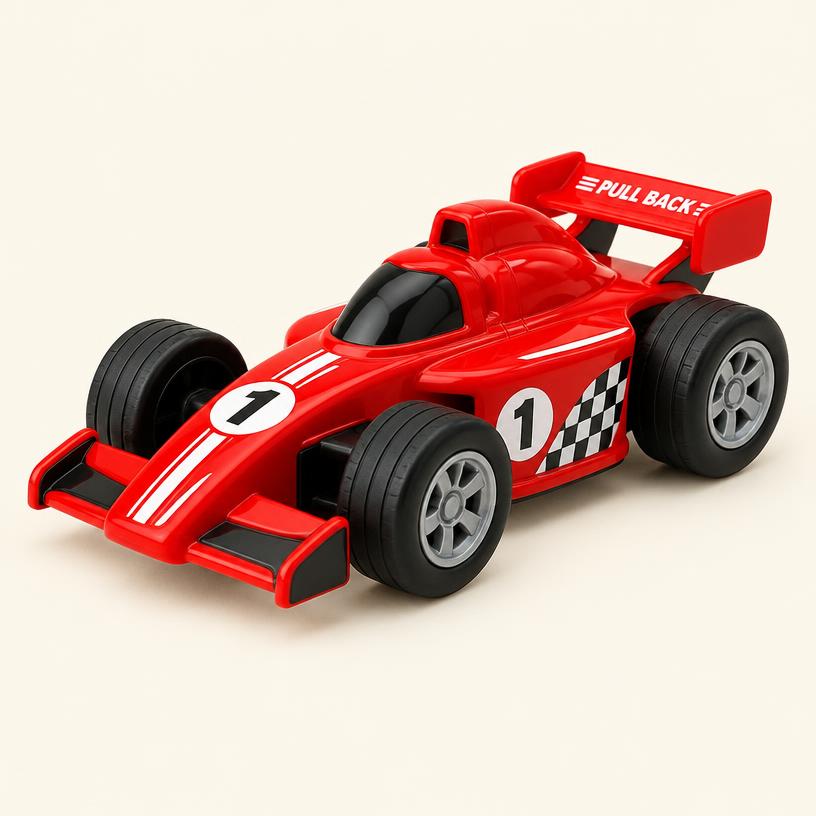
Pull-back race car
₹120 / pc
Min 20 pcs
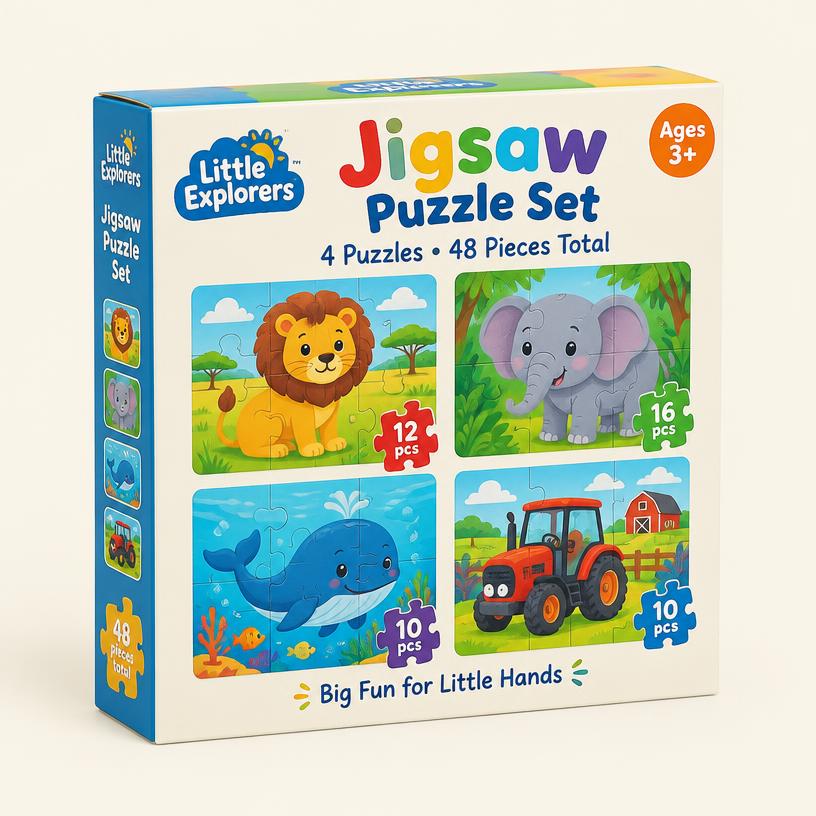
Jigsaw puzzle set
₹100 / pc
Min 12 pcs
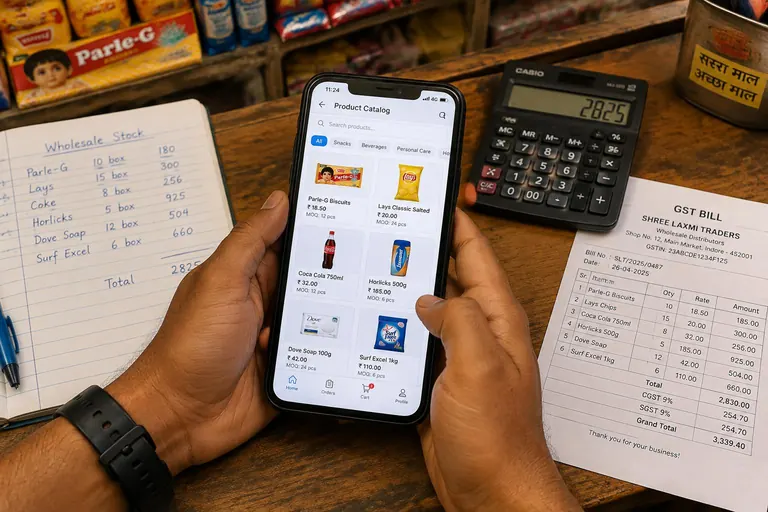
The buyer’s view on a phone
OrdersKaro · Sample preview
Real-life example
Shirts in sizes, toys in cartons
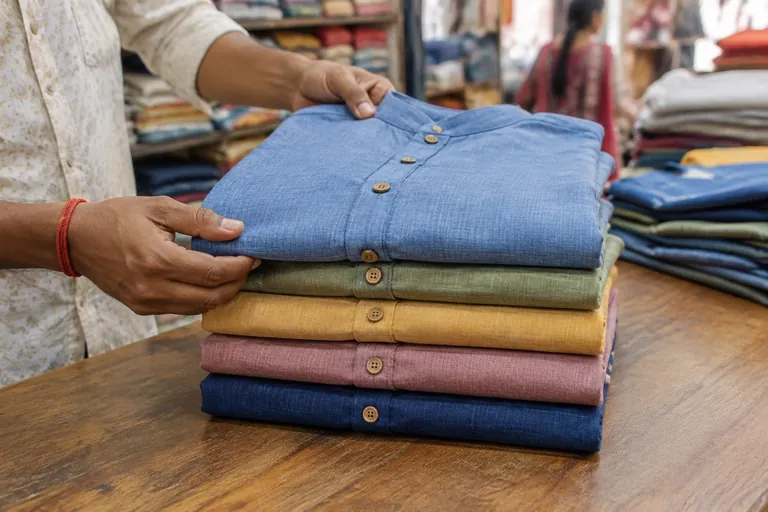
A seller lists a cotton shirt in S/M/L with MOQ 24, and a toy car packed 12 to a carton.
- 112 S + 12 M = 24 → the shirt minimum is met
- 225 toy cars → rejected: not whole cartons
- 336 toy cars (3 cartons) reach the ₹90 slab
Who this guide is for
For sellers setting up products with sizes or products packed in cartons — and for when a buyer says the catalogue won't accept his quantity. New to MOQ and slabs? Read the MOQ and bulk pricing guide first. Rates here are samples before GST and extra charges.
When to give a size its own rules
Keep the shared minimum when buyers mix sizes and you can pack any mix. Give a size its own minimum or slabs only when it really works differently — say, a size you only make in bigger runs.
A size with its own minimum is checked alone. If S and M each need 24, then 12 S + 12 M is rejected and 24 S + 24 M is accepted. That size also stops counting toward the product's shared minimum and slabs, so don't mix both approaches on one product without a reason.
Shared or separate minimum?
How do buyers usually order this product?
Example 2: a toy sold only in full cartons
A toy car is packed 12 to a carton and sold only in full cartons. Minimum 24 pieces (2 cartons). Rate ₹100 a piece, ₹90 from 36 pieces.
Set pieces per carton, turn on full cartons only, set the minimum to 24 and add one slab at 36. The quantity then moves one carton at a time.
- 12 pieces → rejected: below 24
- 25 pieces → rejected: not whole cartons
- 24 pieces (2 cartons) × ₹100 = ₹2,400
- 36 pieces (3 cartons) × ₹90 = ₹3,240
Toy car: full cartons of 12
Toy car · MOQ 24 pc · 12 pc per carton · ₹100 · ₹90 from 36
24 × ₹100 = ₹2,400
Add 12 more pc for ₹90 each.
Sample rates before GST. Step = one carton.
Cartons and variants together
The full-carton rule belongs to the product, not each size. OrdersKaro checks that the total across all sizes is a whole number of cartons. You can't set a different carton size per variant — if each size has its own carton size, list them as separate products.
Keep the minimum equal to one carton or a multiple. A minimum of 30 with cartons of 12 forces the buyer to 36 anyway and only confuses him.
Why a buyer's quantity is rejected
The cart shows a message on the line, and the same rules are checked again when the order is saved. The table above lists each message and the fix. One more case: a size you have since switched off must be removed by the buyer.
| Message | What to change |
|---|---|
| Minimum not met | Add pieces (count all sizes unless a size has its own MOQ) |
| Not full cartons | Round to a multiple of pieces per carton |
| Above maximum | Reduce, or raise the product maximum |
| Size unavailable | Remove the switched-off size |